SEO Didn't Die — It Became More Demanding
The funeral for SEO has been held every year since 2010.
When voice search arrived, they said SEO was dead. When social media peaked, they said search was irrelevant. Now, with the advent of AI Overviews and ChatGPT, the chorus is louder than ever: "No one will click on links anymore. The answer engine will replace the search engine."
They are wrong. But they are also partially right.
The SEO of "tricks" is dead. The SEO of keyword stuffing, dubious backlinks, and writing 500-word recipes where the actual recipe starts after 400 words of life story—that SEO is not just dead; it is being actively purged. The internet is being cleaned.
From Keywords to Concepts
Old SEO was about matching strings of characters. If a user searched for "best running shoes," you needed to have the words "best running shoes" on your page as many times as possible without looking insane.
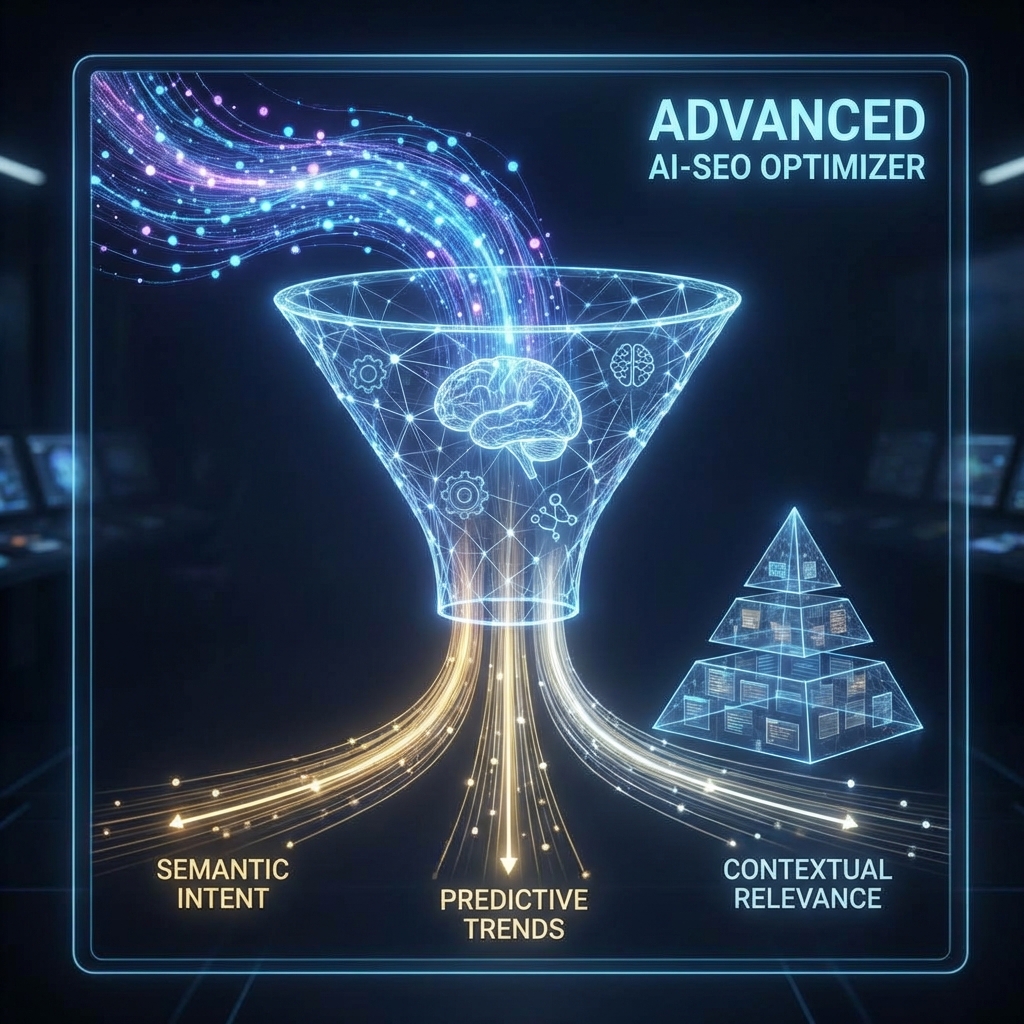
New SEO is about matching intent and authority. Search engines (and now answer engines) are no longer simple indexers; they are semantic understanding machines. They don't just look for words; they look for the *meaning* behind the words. They are looking for the "entity" of your brand and the "depth" of your knowledge.
If you are a shallow site, this is terrifying. If you are a structural site, this is the greatest opportunity in a decade.
The Theory of Information Gain
Google has explicitly stated a preference for "Information Gain." This means: Does your content add something new to the conversation, or is it just a rehash of the top 10 results? If you are using AI to summarize what is already out there, your Information Gain is zero. You are redundant. You are invisible.
To survive in the post-Google era, you must be a primary source. You must offer a unique perspective, proprietary data, or a structural framework that no one else has. You cannot survive by being the 11th best article on a topic.
AI as the Ultimate Gatekeeper
Think of AI not as a content creator, but as a hyper-critical reader. Models like Gemini and GPT-4 are training on the entire web. They are learning to distinguish between high-perplexity (unique, human, complex) text and low-perplexity (predictable, generic) text.
Optimizing for AI isn't about hiding secret code in your footer. It's about clarity. It's about structure. It's about having a site architecture that an AI agent can traverse and understand instantly. If your site is a mess of broken javascript and confusing navigation, the AI agent will simply ignore you.
We are moving from "Search Engine Optimization" to "Answer Engine Optimization" (AEO) and "LLM Optimization." The goal is no longer just to rank on a page; the goal is to be *cited* by the model.
The Return of the Technical
This shift brings us back to technical fundamentals. Speed matters more than ever. Schema markup—the code that explains your content to machines—is no longer optional; it is your translator. A clean, semantic HTML structure is your resume to the robots.
At DFSK, we believe that the future of visibility is structural. You cannot marketing-spend your way out of a bad foundation. You have to build a site that is worthy of being found.
SEO didn't die. It just grew up. It stopped playing games and started demanding excellence.