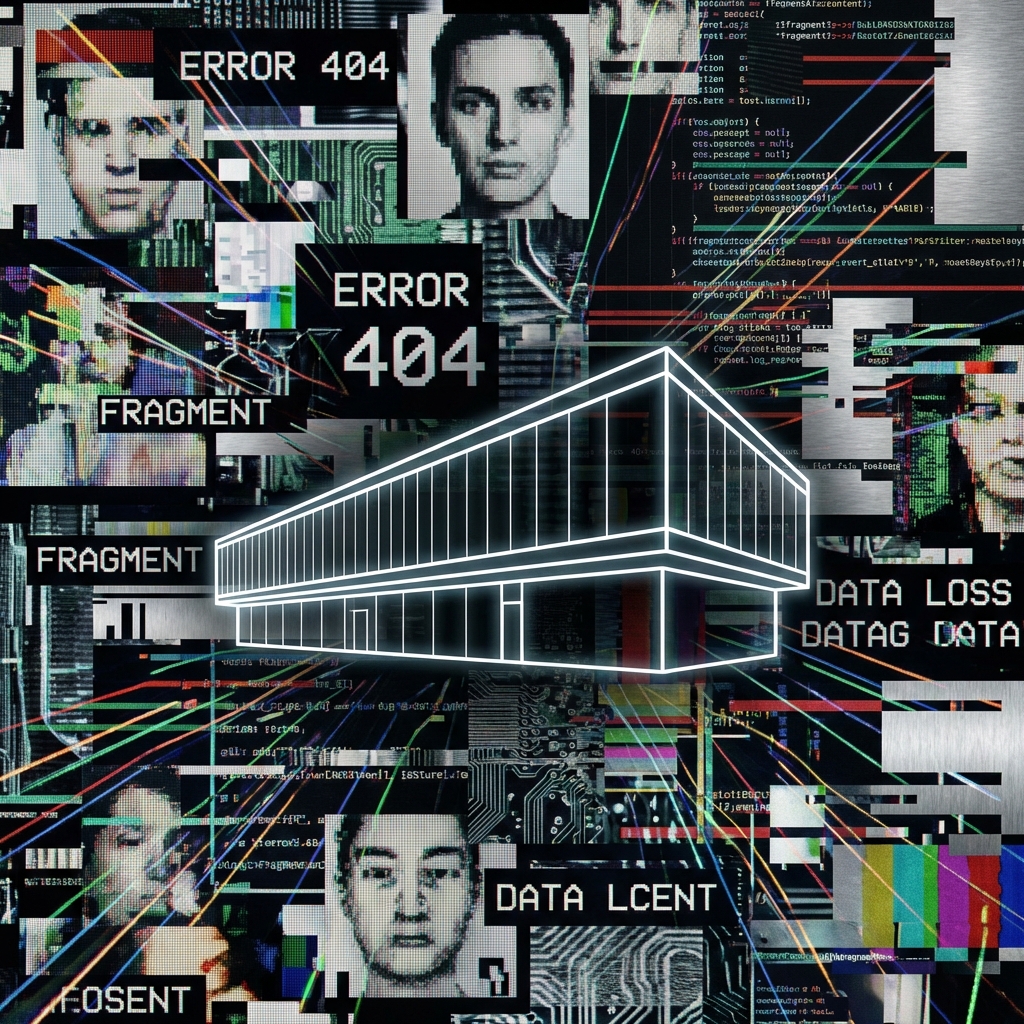
Content Without Structure Is Noise
The internet is currently drowning in volume.
Every day, millions of blog posts, social media updates, and generated articles are poured into the digital ether. The promise was that "content is king." The reality is that content has become a commodity, and like any commodity in massive oversupply, its value has plummeted to near zero. We have confused production with creation, and activity with signal.
The problem is not that there is too much information; it is that there is too little structure. We are building vast libraries where the books are thrown onto the floor in a pile rather than organized on shelves. In this environment, adding more books does not increase knowledge—it increases the difficulty of finding anything at all. It increases noise.
The Velocity of Irrelevance
Consider the typical content strategy of a modern digital brand. The goal is frequency. "Post daily," "feed the algorithm," "stay top of mind." This approach treats attention as a resource to be harvested rather than a relationship to be cultivated. The result is a stream of ephemeral debris—content designed to be consumed in seconds and forgotten in minutes.
This is the "Velocity of Irrelevance." The faster you produce shallow content, the faster your brand becomes associated with low-value noise. You are training your audience to ignore you. You are teaching the algorithms that your output is disposable.
Structure, on the other hand, is static. It is slow. It requires planning. A well-structured knowledge base, a carefully curated archive, or a coherent argument developed over a series of interconnected essays—these are things that resist the flow of the feed. They are anchors. When users find them, they stop scrolling. They start reading.
The Architecture of Meaning
Meaning is not found in isolated data points; it is found in the relationships between them. A fact by itself is a trivia question. A fact connected to a theory, supported by history, and contrasted with an opposing view is knowledge.
This is where digital architecture becomes the primary differentiator. If you destroy the navigation of a library, you destroy the library, even if the books remain untouched. Similarly, if you present your content as a flat, chronological stream, you are stripping it of its context. You are forcing the user to do the heavy lifting of synthesizing the information.
Most users won't do this work. They will bounce. They will leave for a platform that has done the thinking for them.
At DFSK, we argue that the "site" must return to its roots as a "locus"—a place. A place has geography. It has landmarks. It has a logic to how you move through it. You don't just "scroll" a building; you explore it. Digital spaces should be no different.
Signal in a Generative Age
With the rise of Large Language Models (LLMs), the cost of generating text has dropped to zero. We are about to see a tsunami of synthetic content that mimics human insight but lacks human intent. This "gray goo" of plausible-sounding text will flood every search engine and social feed.
In this future, "having content" is no longer a competitive advantage. Everyone has content. Everyone has infinite content. The advantage shifts to those who have verified content, organized content, and curated content.
Structure becomes the signal. The fact that a human (or a highly sophisticated system) has chosen to place *this* specific piece of information next to *that* specific piece of information conveys meaning that a generative probabilistic model cannot easily replicate. Curation is the new creation.
The Call to Order
We must stop feeding the noise machine. We must stop optimizing for metrics that measure waste (views, impressions) and start optimizing for metrics that measure impact (understanding, retention, return). This requires a moratorium on "filler content."
If you have nothing structured to say, say nothing. Silence is better than noise. But if you do have something to say, build a house for it. Don't just toss it into the river of the feed. Build a page. Link it to your past thoughts. Link it to your future predictions. Give it a URL that will work in ten years.
Content without structure is noise. Structure without content is a frame. But content within structure? That is a monument.